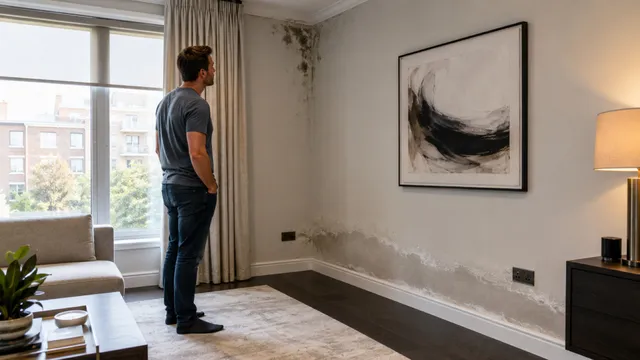

An amendment is any change made to an independent check-in report after it is first issued, whoever asks for it and whenever they ask. That’s a broad category, and most amendment requests are entirely legitimate. What makes one proper is not when it arrives. It is whether it corrects something the report got wrong about what was true on inspection day, rather than adding something that happened afterwards.
This is general information about how independent inventory reporting tends to work in practice across the UK. It is not legal advice about a specific tenancy or dispute.
What makes an amendment proper?
A proper amendment brings the report into line with what was actually true at check-in, where the original record got that wrong. The inspection happened, something in it was missed, mis-described, or recorded inaccurately, and the amendment fixes the written record to match the reality of that day. Nothing new is introduced. The event being described already existed at the point of inspection. Only the account of it was faulty.
That is an ordinary, healthy part of the process. A tenant who says the report calls a worktop clean when it already had a mark on it, or who spots that a room was skipped entirely, is asking for a proper amendment. The clerk checks the original evidence from the day and corrects the report if the tenant is right.
What makes an amendment improper?
An amendment stops being proper the moment it asks the report to describe something that did not exist on inspection day. If the thing being reported arose after check-in, adding it to the report is not a correction, however it is worded. It is the insertion of a new event into the record of a day that has already passed. The report was accurate about what it recorded. There is nothing in it to fix.
This is true whether the request arrives an hour after the report is issued or a month later. Timing does not make an improper request proper, and it does not make a proper request improper either. A genuine factual error is worth correcting whenever it is spotted. A new event dressed up as an old one stays improper no matter how quickly it is raised.
Does the review window matter at all, then?
Yes, but as a practical matter of process, not as the test of legitimacy. Most inventory providers give tenants a defined period, commonly seven to ten days after the report is issued, to look it over and flag anything they believe is wrong. This is a genuine industry norm, not a one-off practice: it turns up consistently across inventory providers and deposit-scheme guidance alike. Providers use this window because it is the point at which the inspection is freshest and easiest to check against, and because giving a tenant a defined opportunity to review the report strengthens its evidential weight if it is later relied on in a dispute.
But that window is a matter of when a provider will routinely entertain a request, not a definition of what counts as an amendment. A correction request that arrives after the window has closed does not stop being a genuine correction. It is simply less likely to be actioned as a matter of the provider’s own process, and providers are entitled to draw that practical line. What the window does not do is turn a request made inside it into something legitimate if it fails the actual test: does it correct a recorded fact, or does it introduce a new one.
Why the review window becomes a target for abuse
Because it is the moment a request is most likely to be granted without much scrutiny, the review window is exactly where an improper amendment is most likely to be dressed up as a proper one. A tenant who has caused damage after moving in has an obvious incentive to report it inside the window and frame it as something the original report missed, rather than something that has happened since. If that framing is accepted uncritically, the check-in report ends up showing a defect as pre-existing when it was not, shifting responsibility away from the tenant and onto a record that never actually captured it.
This is not a reason to tighten the window or treat every request inside it with suspicion. Genuine corrections are the overwhelming majority of what the window is for. It is a reason to apply the same test to every request, inside the window or out: is this correcting an error in the day’s record, or introducing an event from afterwards.
Three questions that settle it, whatever the timing
Does the report’s own evidence contradict the claim, or is it simply silent?
If check-in photographs clearly show the specific spot in question and show no sign of the reported defect, that is not a gap the report failed to capture. That is evidence against the claim. A silent report, one that simply did not photograph that exact area, is a different and more ambiguous case.
Is the request describing an error in what was recorded, or an event that has occurred since?
“You wrote clean, it wasn’t” is a correction. “There’s now a mark here” is a new report, whatever word is used to introduce it, and whatever day it is raised on.
Would granting it make the report describe something as present on inspection day when it was not?
This is the test that actually matters. A request that passes it is a proper amendment, full stop, regardless of when it lands. A request that fails it is not an amendment at all, whatever it is called, and should be logged separately instead.
Comparing a proper amendment against an improper one
Feature
Proper amendment
Improper amendment
What it corrects
An error in how check-in day was recorded
Nothing; introduces an event from after check-in
Relationship to timing
Legitimate whenever it is raised
Improper whenever it is raised, window or no window
Relationship to existing photographs
Consistent with, or not addressed by, the evidence already gathered
Contradicted by clear, dated photographs of the same spot
Correct clerk response
Check the original evidence, correct the report if the tenant is right
Log a new, separate, dated record; do not touch the original
Effect on the report’s evidential value
None; the report becomes more accurate
Would destroy it, since the report would misstate when the defect appeared
What the clerk should actually do
Apply the three questions to every request, regardless of when it arrives. If it passes them, it is a proper amendment: check the original evidence, confirm the tenant’s point, and correct the report. If it fails any of them, particularly if the report’s own photographs show the area clean and undamaged, it is not an amendment, whatever it is called by the person asking. Log it instead as a new, dated record, stating plainly what is now being reported and that it does not appear in the original check-in evidence.
This keeps two records intact rather than one compromised one: an accurate check-in report, and an honest account of what surfaced later. If the disagreement escalates to a formal deposit dispute, both documents, kept separate and dated, are what an adjudicator will actually want to see.
The takeaway
An amendment is any change to the report after issue, and most requests for one are entirely legitimate. What decides whether a specific request should be granted is never the clock. It is whether it corrects an error in the record of a day that has already happened, or tries to insert a new day’s events into an old report. Providers commonly only entertain requests within a week or so of issue as a matter of practical process, and that window is exactly where an improper request is most likely to be waved through unchecked. Three questions settle it every time, whatever the timing: does the evidence contradict the claim, is this a correction or a new event, and would granting it misstate what was true on inspection day. Get those right and the report stays what it needs to be, a fixed, trustworthy account of one specific day.
Sources:
- Independent Inventory Reports Explained: What They Are and What They’re Not, SRP Inventories — srpinventories.co.uk/independent-inventory-reports-explained
- Evidence for Deposit Disputes: What You Need and How to Prepare, mydeposits — mydeposits.co.uk/content-hub/…
- Tenancy Deposit Disputes Explained: Process & Evidence, mydeposits — mydeposits.co.uk/content-hub/…
- How an Inventory Report Protects Landlords in Deposit Disputes, Assist Inventories — assistinventories.co.uk/2026/…