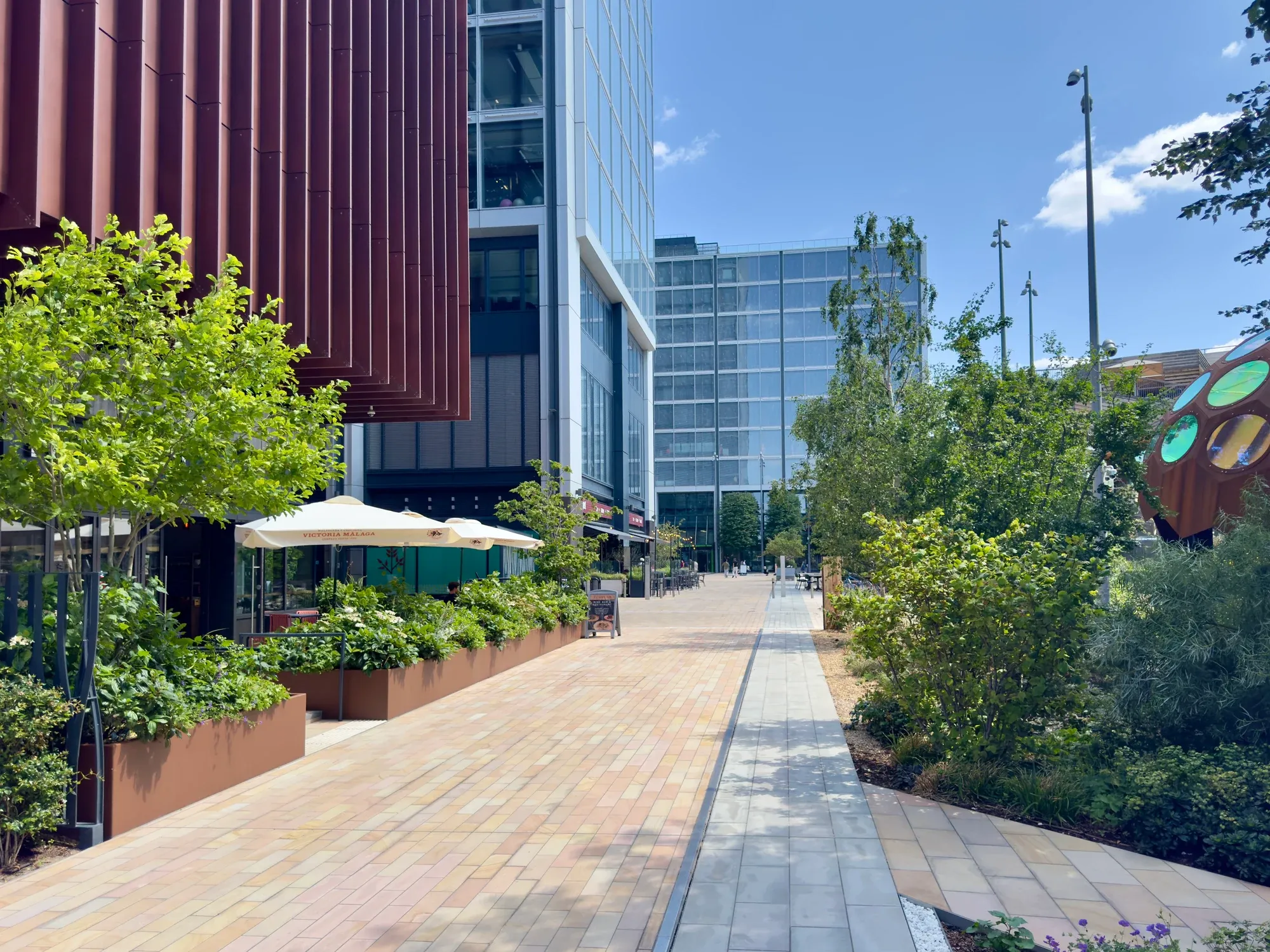
Stratford has transformed far beyond an East London transport hub, it’s now a thriving, self-sustaining urban neighbourhood. Rooted in its Olympic legacy, this part of London has blossomed into a key residential and cultural district, with long-term regeneration reshaping its identity.
Since the 2012 Olympics, Stratford’s housing market has surpassed Greater London in both price and rent rises reporting a 104% house price increase across the area (E15/E20), compared to just 65% for the rest of London. It’s also seen a population surge, with a 42% rise (to 73,000 residents), a notable expansion of young professionals, and growth in private renting from 21% to 32% of households.
Large-scale residential development continues: over 2,200 homes are currently under construction, an additional 8,500 are in the pipeline, and nearly 30,000 more homes are projected by 2030
Stratford now: A residential & cultural hub
Today, Stratford blends culture, green space, retail and new community infrastructure:
Queen Elizabeth Olympic Park and East Village now host public sports facilities and 7,000+ residents.
The East Bank cultural district opened in autumn 2023, bringing institutions like V&A East, Sadler’s Wells East, BBC Music, plus growth in university campuses (UCL)
The rapid introduction of office and retail elements (like TfL, FCA, Here East) has created tens of thousands of local jobs, adding to Stratford’s appeal.