

Describing a wall accurately requires more than writing “marks to paintwork.” The words used should help someone who has never visited the property understand exactly what was present, where it appeared and how significant it was. A good description identifies the surface or finish, names the specific defect and records its location, approximate size and quantity. For example: “Two scuff marks at mid level to the right hand side of the wall.”
This article explains the correct terms for common wall paints, surface finishes and visible defects, including the difference between a scuff, scrape, gouge and chip. It also shows how to describe what you observe clearly and neutrally, without making assumptions about how it happened or who may be responsible.
Why does the exact word matter so much?
An adjudicator can only weigh what you describe, and often they never see the property. In England, deposit disputes go to the scheme that holds the money, and its adjudicator reads your report cold. They cannot picture “marks to wall.” They can picture “two filled and overpainted holes, approx 5mm diameter, to chimney breast.”
Vague words give the person deciding nothing to hold. Precise nouns do the opposite. The word you choose is the difference between a note that supports a claim and one that quietly sinks it.
There is a second reason, and it matters just as much. A precise description separates what is there from why it is there. That separation protects everyone. It stops you accidentally deciding a dispute before it starts.
What is the correct order to describe a finish?
Follow the same sequence every time. It reads consistently, and nothing gets left out.
-
Surface. What is the thing? Plastered wall, woodchip paper, lining paper, gloss-painted skirting.
-
Defect. What is on or wrong with it? Scuff, chip, hairline crack, filled hole.
-
Location. Where exactly? “To wall left of window,” “lower third of chimney breast.”
-
Dimension. How big? “Approx 40mm,” “approx 5mm diameter.” Approximate is honest and fine.
-
Quantity. How many? “Three,” “a cluster of.”
So a full entry reads: “Two chips, approx 10mm, to gloss-painted door frame, hinge side.” Anyone reading that can see it without standing in the room.
Which paint and surface finishes should a clerk be able to name?
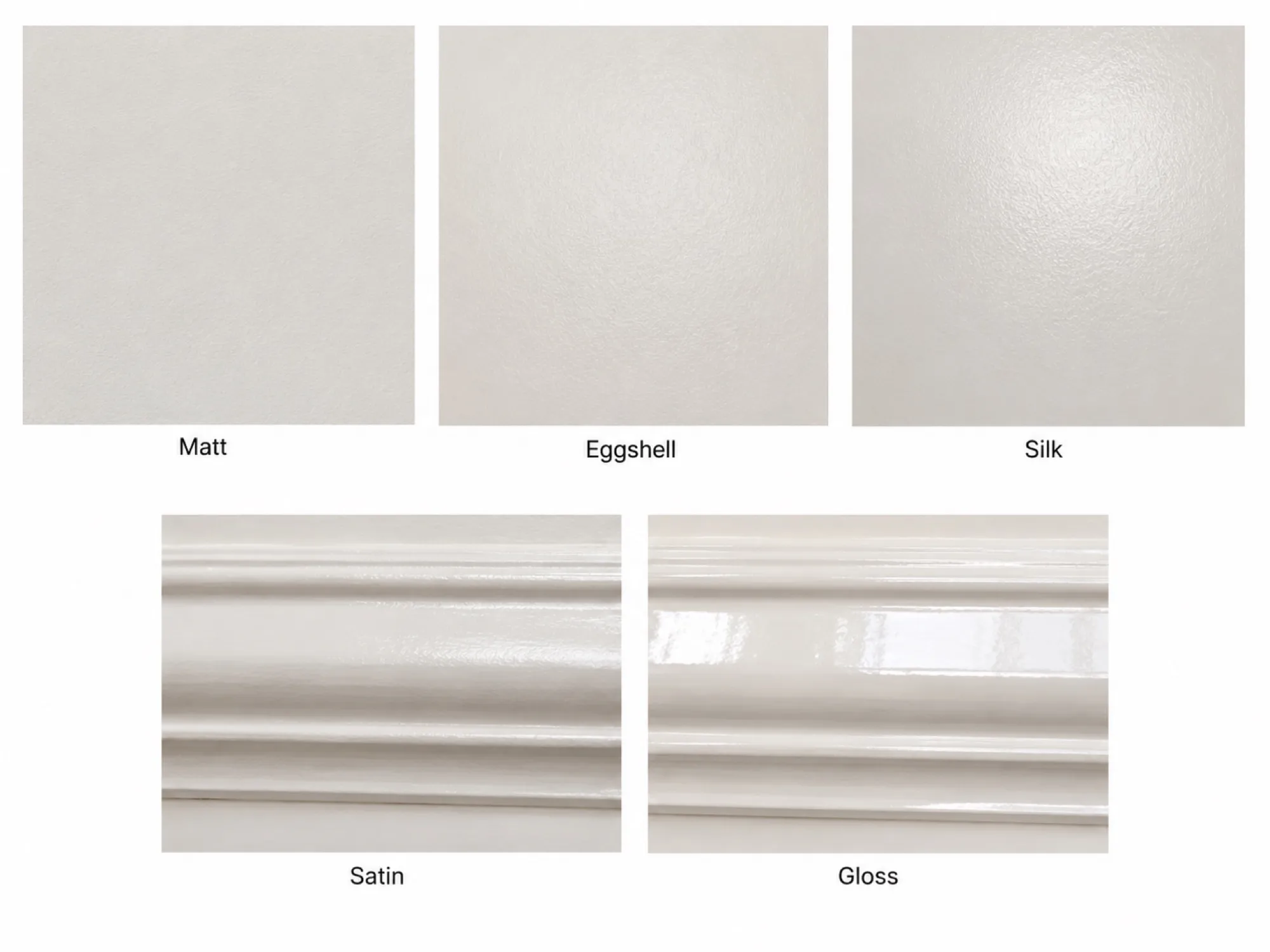
Start with paint sheen, because it is the most common gap. Sheen is how much light the paint reflects, and it is a genuine, describable property, not a value judgment.
- Matt. No shine. Reflects little light. Common on ceilings and walls.
- Eggshell. A slight, soft sheen. Often on walls or woodwork in higher-traffic rooms.
- Silk. A noticeable soft sheen, between eggshell and gloss.
- Satin. Similar to silk, a mid-level sheen, common on woodwork.
- Gloss. High shine, reflective. Traditional on skirting, frames and doors.
Then wall coverings, which people routinely confuse:
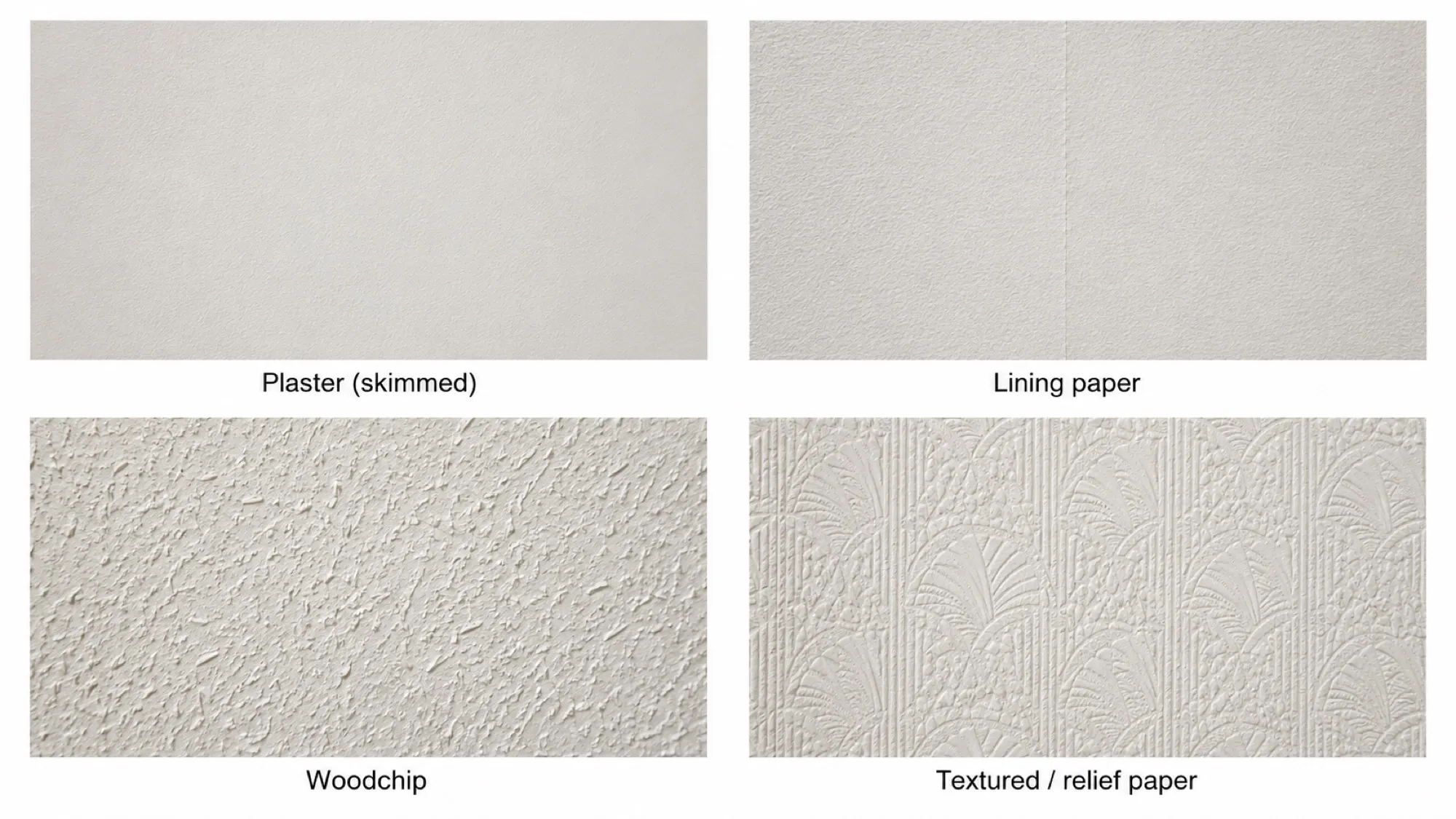
- Plaster (skimmed). A smooth plastered surface, usually painted directly.
- Lining paper. Plain paper hung to give a smooth base before painting.
- Woodchip. Paper with small wood fragments in it, giving a bumpy texture. Usually painted over.
- Textured / relief paper (e.g. Anaglypta-type). Paper with a raised pattern. Name it as textured or relief paper, not by a brand unless you are certain.
A note on brands. Say “woodchip” and “lining paper” freely, because they are generic terms. Be cautious with trade names. If you are not certain it is a specific product, describe the appearance instead.
How do I tell a scuff from a scrape from a gouge?
By depth and by how the surface has moved. This is where most vague notes fall down, and where precise nouns earn their keep.
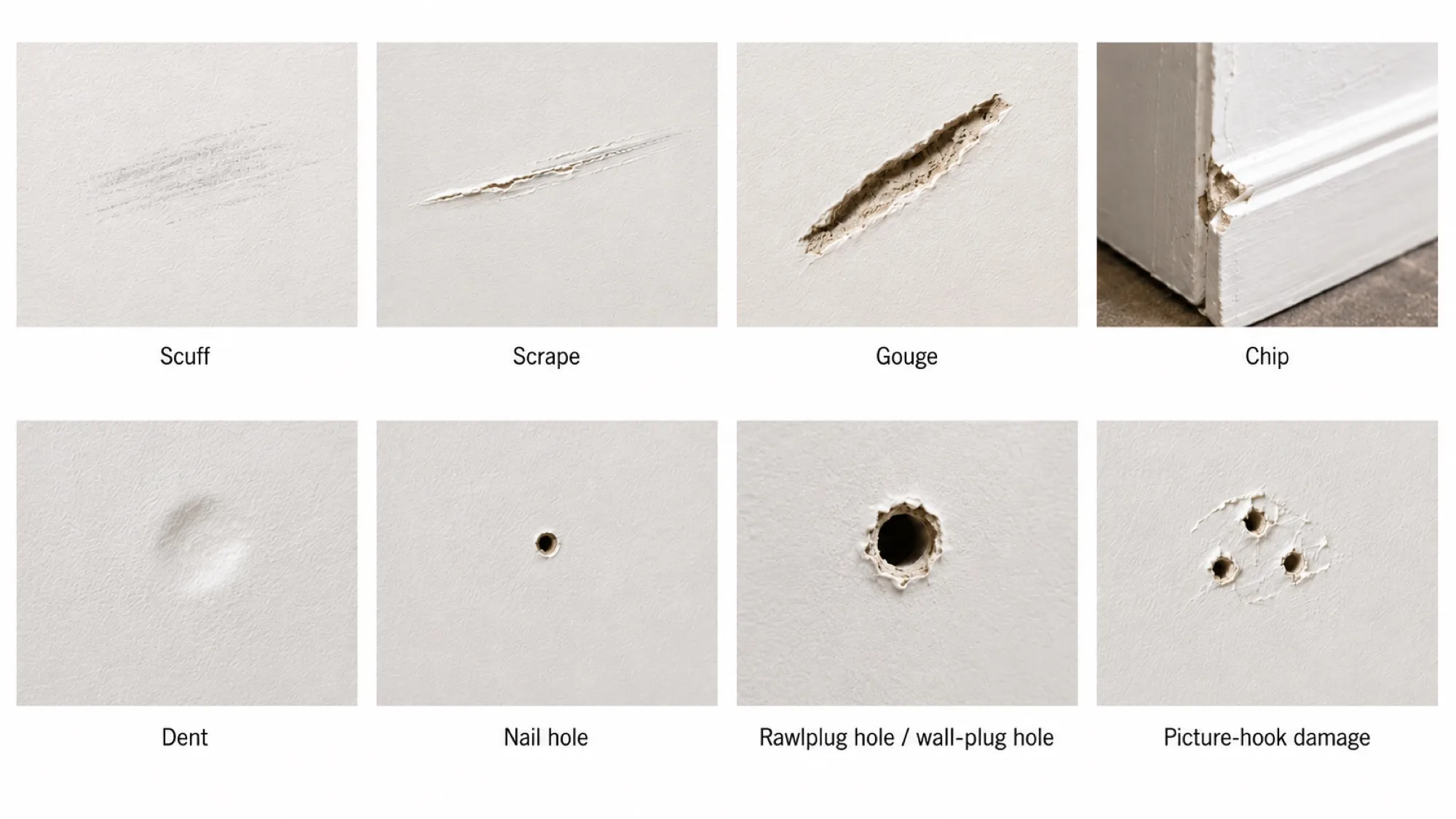
- Scuff. Surface-level. A mark left where something rubbed the finish. No material removed.
- Scrape. The finish is dragged or lifted along a line, but shallow.
- Gouge. Material is dug out. There is depth. You can feel it.
- Chip. A small piece of the finish or surface has broken away, usually at an edge or corner.
- Dent. The surface is pushed in without breaking, typical on plasterboard or timber.
- Nail hole. A single small hole from a nail or panel pin.
- Rawlplug hole / wall-plug hole. A larger hole, roughly the diameter of a wall plug, from a fixing.
- Picture-hook damage. Two or three small holes together, or a small area of lifted paint, where a hook was fixed.
Cracks deserve their own care. A hairline crack is very fine, thread-like, and follows the surface. Beyond that, resist naming the type. Describing a crack as a “settlement crack” edges towards diagnosing a cause, and cause is not your job at the description stage. Describe it plainly instead: “crack, approx 200mm, hairline widening to approx 2mm, to ceiling line above door.” Note whether it is straight or stepped if that is what you observe. Let the measurement and the plain description do the talking.
Vague term versus precise replacement
This is the table to keep beside you. The left column is what people write. The right column is what an adjudicator can actually use.
Vague term
Precise replacement
Why it is better
Mark
Scuff, scrape, smear, or scratch
Identifies what has actually happened to the surface
Damage
Chip, gouge, dent, or crack
“Damage” is a conclusion, whereas these terms describe observable defects
Crack
Hairline crack, crack measuring approximately 2 mm, or stepped crack
Records the crack’s size and character, making its apparent severity clearer
Hole
Nail hole, wall plug hole, or picture hook holes
Distinguishes minor fixing holes from more significant damage
Wall covering
Plaster, lining paper, woodchip, or textured wallpaper
Identifies the specific surface being assessed
Paint
Matt, eggshell, silk, satin, or gloss
The paint finish affects how wear, repairs, and touch ups appear
Discolouration
Yellowing, staining, or patch of differing sheen
Distinguishes staining from uneven paintwork or a previous touch up
Tired or worn
Describe the specific visible condition instead
These are subjective judgements rather than precise condition records
General wear
List each visible defect and its location
An adjudicator cannot properly assess a vague reference to general wear
Poor or cheap finish
Omit and record only observable defects
Quality is a subjective value judgement, not a condition description
Why should the description stay silent on cause?
Condition (what is there) and cause (why it is there) are two different jobs, and mixing them weakens both. Your description stage should be cause-neutral. Record the chip. Do not write “chip caused by tenant’s furniture.” You did not see it happen, and the moment you assert cause you have taken a side.
Good, clear records are worth keeping as a matter of sound practice, and clearer records tend to make any later dispute easier to resolve. Whether a defect is fair wear and tear or tenant damage is a question for later, weighed against how long someone lived there and how the property was used. That call belongs to the parties and, if it comes to it, the adjudicator. Your job is to give them a description so precise that the argument is about interpretation, not about what was actually on the wall.
Both the Tenancy Deposit Scheme and mydeposits set out in their published dispute guidance that adjudicators reach decisions on the evidence put before them. On that basis, detailed, dated condition records tend to carry more weight than general impressions. A precise noun is evidence. “Tired” is not.
A short glossary to adopt
Keep this list somewhere you can copy from. Consistency across a report matters as much as the individual words.
Finish terms: matt, eggshell, silk, satin, gloss, plaster (skimmed), lining paper, woodchip, textured / relief paper, emulsion (water-based wall paint), sheen.
Defect terms: scuff, scrape, scratch, gouge, chip, dent, hairline crack, crack (with measurement), nail hole, wall-plug hole, picture-hook holes, filled hole, overpainted patch, staining, yellowing, patch of differing sheen, lifting (of paper or paint), flaking.
One caution. Stick to words an adjudicator will recognise. Do not invent pseudo-technical terms to sound authoritative. “Micro-abrasion” impresses nobody and means less than “light scuff, approx 20mm.”
Key takeaway
Name the surface, then the defect, then location, dimension and quantity. Choose the exact noun. Keep cause out of it. “Two filled and overpainted holes, approx 5mm, to chimney breast” will always beat “marks to wall,” and in a dispute it is the difference between evidence and an impression.
This is general guidance on writing condition records, not legal advice on any particular dispute. If a specific case turns on a fine point, the deposit scheme’s own guidance and, where needed, a qualified adviser are the right next step.
Sources:
- Tenancy Deposit Scheme guidance on evidence and reports: tenancydepositscheme.com/resources
- mydeposits dispute guidance: mydeposits.co.uk