You tell them apart by the detail, not by a receipt. A professional clean usually shows uniform attention to hard-to-reach areas: inside the oven, behind appliances, in window tracks, on top of doors. A domestic clean tends to cover visible surfaces but miss those details. Record what you see against the check-in condition, not against a subjective standard.
This applies UK-wide: a tenant’s job at check-out is to return the property to the cleanliness recorded at check-in, allowing for fair wear and tear. Fair wear and tear means the gradual decline you would expect from normal use over the length of the tenancy. It does not cover dirt left behind.
That baseline matters more than any judgement about whether a clean was “professional”. As a clerk, your role is to record condition accurately. Whether anyone gets charged for cleaning is a matter for the landlord, the tenant and, if it comes to it, the deposit scheme. Your evidence is the comparison between check-in and check-out, not your personal verdict on cleanliness.
What does a clerk actually look for, area by area?
The quickest way to read a clean is to inspect the places domestic cleaning usually skips. These are the spots that take time, the right products, and a willingness to move things. A professional clean tends to treat them all to the same standard. A domestic clean often does the visible surfaces well and leaves the rest.
Use close-up photographs of specific areas. Avoid global labels like “dirty throughout” or “not cleaned to a professional standard”. Those are opinions, and they are hard to defend. A close-up of carbon baked onto an oven door, next to your check-in photo of the same door clean, is a fact.
Area
Professional clean standards
Domestic clean standards
Ask
yourself
What to
photograph
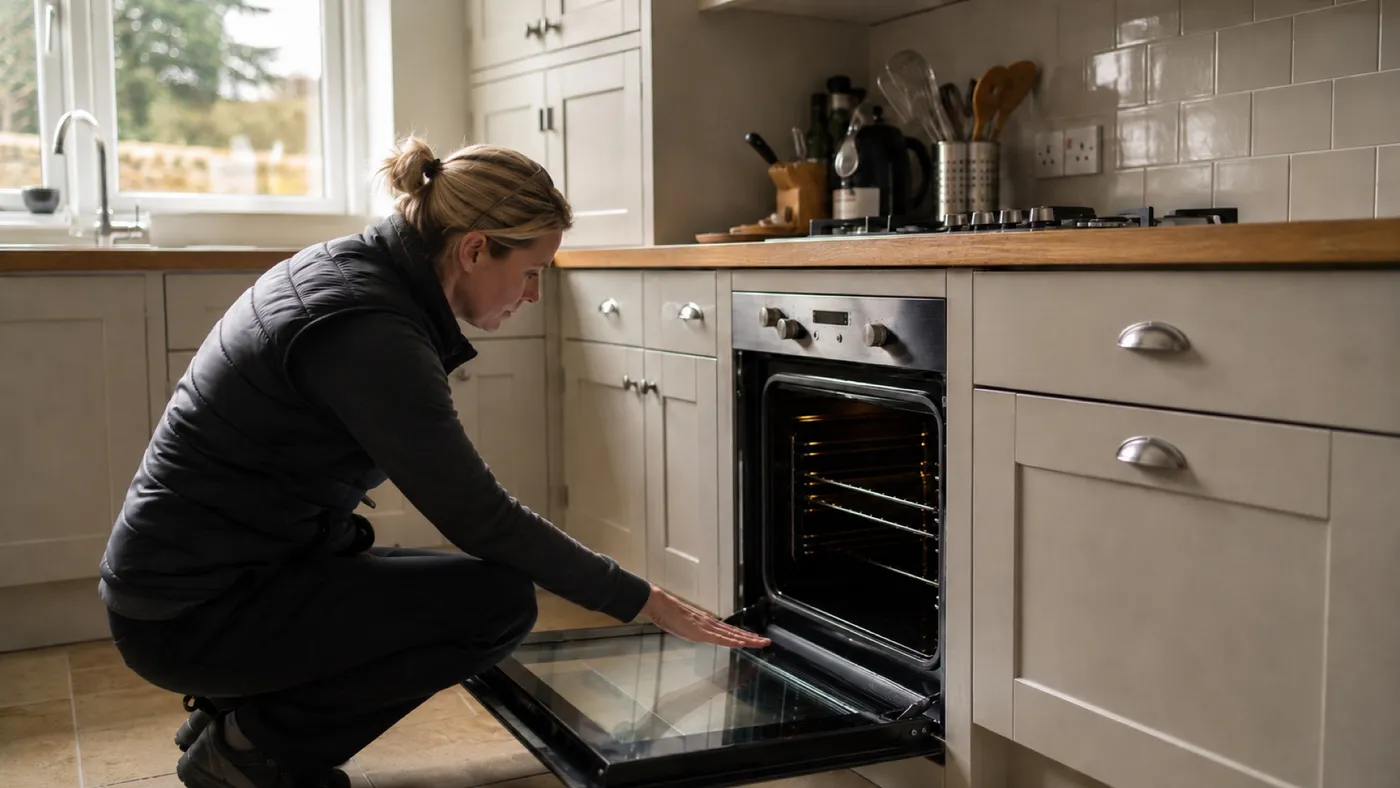
Oven interior
The racks, glass and interior surfaces have been thoroughly degreased, with most burnt residue and carbon removed.
The obvious surfaces have been wiped, but grease, burnt residue or carbon remains on the back, base, racks or door glass.
Is there still visible grease or burnt residue inside the oven?
Photograph the door glass and rear interior with the oven door open.
Extractor and hob
The filter and underside of the canopy have been degreased and cleaned.
The visible surface has been wiped, but grease remains on the filter or underneath the extractor canopy.
Is there a sticky or visible grease film underneath the extractor or on the filter?
Photograph the underside of the canopy and the metal filter.
Taps and tiles
Limescale has been removed and the taps and surrounding surfaces are clean and bright.
The surfaces look clean, but limescale remains around the tap base, spout or nearby tiles.
Can you still see white, chalky or crusted deposits around the taps?
Photograph the tap base and spout from an angle that clearly shows any build up.
Behind and under appliances
Where safely accessible, the appliance has been moved and the floor behind and underneath has been cleaned.
The visible floor has been cleaned, but the appliance has not been moved and dust or debris remains behind it.
Is there dust, debris or residue in the gap behind or underneath the appliance?
Photograph the floor gap behind the washing machine, fridge or other accessible appliance.
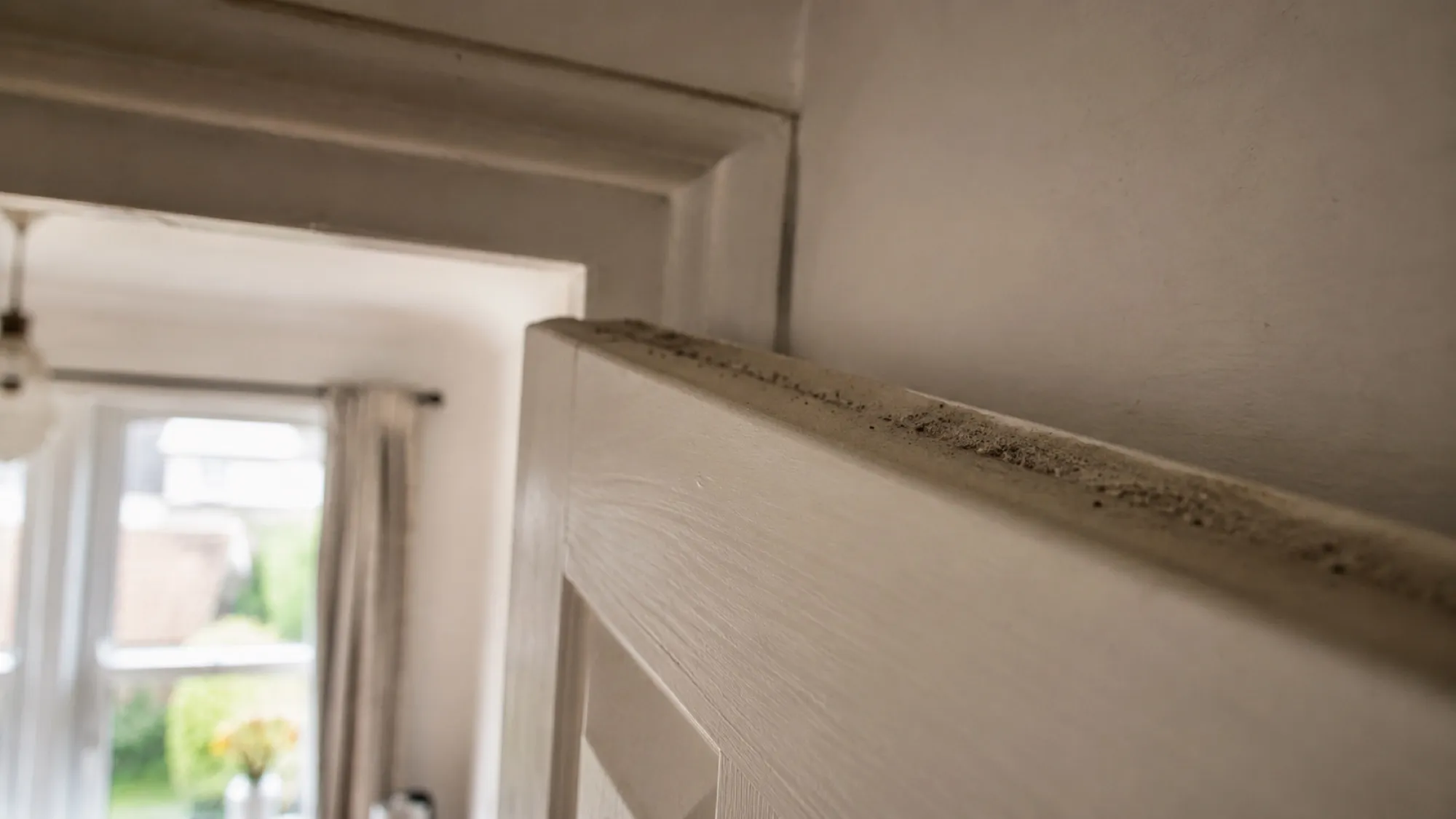
Skirting boards and tops of doors
Dust has been removed from skirting edges, door tops, frames and other high level surfaces.
Main surfaces have been wiped, but dust remains along skirting edges, door tops, frames or picture rails.
Does a finger swipe reveal visible dust?
Photograph the top edge of the door, frame or skirting, ideally showing the dust clearly.
Window tracks
The window tracks and runners have been vacuumed and wiped clean.
The glass has been cleaned, but grit, dust, insects or residue remains inside the runners.
Are there visible particles or debris inside the window track?
Take a close photograph inside the lower window runner.
No single item proves anything on its own. A missed window track might just be an oversight in an otherwise thorough clean. The pattern is what tells the story. Uniform attention to detail across all the awkward areas points one way. Clean visible surfaces with consistently neglected detail points the other.
Why does the check-in baseline decide it, not the receipt?
Because the tenant’s obligation is to return the property as clean as it was at the start, not to a fixed external standard. If the property was professionally cleaned before the tenant moved in, and the inventory and check-in report record that level of cleanliness, then matching it may in practice mean a thorough clean. If it was handed over with limescale on the taps and grease in the oven, the tenant does not owe better than that.
This is why your check-in report is the anchor. A note that says “oven interior clean, no carbon” with a photo gives you something to compare against. A vague “oven: good” gives you very little. The lesson runs both ways: the quality of your check-out evidence depends on the quality of your check-in evidence.
A receipt for a professional clean is not the test either. A receipt shows money was spent. It does not show the property was returned to the recorded condition. Two cleaners can charge the same and leave very different results. Record the condition, and let the receipt be one piece of the wider picture if a dispute arises.
Can a landlord require a professional clean as a default?
Generally no, and this is the part clerks most often get asked about. In England, the Tenant Fees Act 2019 stops a landlord requiring a tenant to pay for professional cleaning as a blanket condition of the tenancy. A clause that simply demands a professional clean at the end, regardless of the property’s actual state, is not enforceable as a fee. The tenant’s duty is condition-based: leave it as clean as you found it.
Wales has equivalent protection under the Renting Homes (Fees etc.) (Wales) Act 2019. The detail differs but the direction is the same. Scotland and Northern Ireland have their own tenancy frameworks, and the general principle that cleaning charges must reflect actual condition against the start of the tenancy holds across the deposit schemes.
The practical upshot for you as a clerk: do not write reports that assume the tenant owes a professional clean. Write what you observe, compared to check-in. If a tenancy agreement still carries an old-style blanket “professional clean” clause, that is a matter for the parties and possibly the deposit scheme to resolve. It does not change what you record.
How do you write it up so it survives a deposit dispute?
Describe observable facts and tie each one to the check-in entry. The deposit schemes decide cleaning disputes on evidence, and they discount sweeping verdicts. The Tenancy Deposit Scheme and others consistently look for a clear check-in record, a clear check-out record, and dated photographs showing the difference.
A strong check-out cleaning entry tends to read like this:
- Specific location. “Oven, main, interior rear panel” not “kitchen”.
- Observable state. “Carbon deposits and baked grease” not “dirty”.
- Comparison. “At check-in recorded clean, no carbon.”
- Evidence reference. The check-out photo number.
Avoid the word “professional” in your condition notes altogether. You are not certifying whether a clean met a trade standard. You are recording how clean the property is, and how that compares to the start. Let the comparison carry the weight.
What to do next
Go back through your check-in template and make sure your cleaning entries are specific enough to compare against later. The single most useful habit is photographing the awkward areas, oven interior, behind the washing machine where possible, window tracks, tap bases, at both check-in and check-out, from the same angle. That paired evidence settles far more cleaning disputes than any judgement about whether a clean was professional.
This is general guidance for clerks, landlords and tenants, not legal advice for a specific tenancy. If a cleaning charge is disputed and headed for adjudication, the relevant deposit scheme’s own evidence guidance is the place to check the standard you are being measured against.
Sources: Tenant Fees Act 2019, legislation.gov.uk; Tenancy Deposit Scheme, dispute resources