Across thousands of inventory and check-out inspections, the same handful of issues recur regardless of a property’s value or furnishing: cleaning shortfalls, wall and paintwork damage, flooring wear, missing items, damp and mould, and safety failures. Cleaning is the most common of all. According to the Tenancy Deposit Scheme, it features in 54% of deposit disputes. The pattern is consistent because the same problems arise wherever people live, and because thin documentation lets honest disagreements harden into disputes.
This applies across the UK, with the dispute figures drawn from England and Wales. The point of naming these recurring issues is not to apportion blame. It is to show clerks what to record carefully, and to help landlords and tenants understand where condition is most likely to be contested at the end of a tenancy. A clerk records what is there. The schemes, and where necessary an adjudicator, decide who pays.
It helps to start from one principle that governs every dispute. A deposit adjudicator treats the deposit as the tenant’s money and only awards from it where the evidence justifies the claim. That single rule is why the quality of an inspection matters so much. The issues below are common; whether they become chargeable depends entirely on what was recorded, and how clearly.
Why is cleaning the most disputed issue?
Cleaning is the single most common source of end-of-tenancy disputes. The Tenancy Deposit Scheme’s 2024/25 briefing found it featured in 54% of cases, with damage close behind at 49%. It tops the list year after year, and the reason is rarely outright neglect. It is usually a gap between two expectations: the standard a tenancy agreement asks for, and the standard a property is actually returned in.
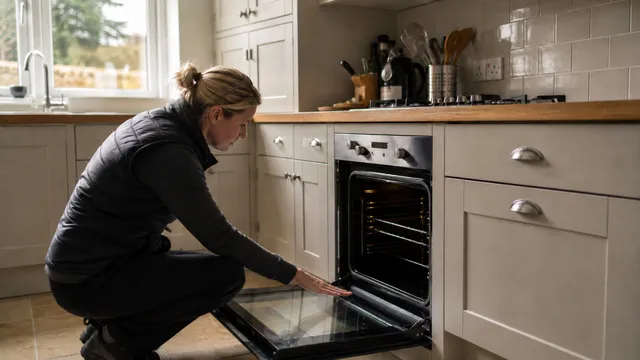
Kitchens and bathrooms produce the most cleaning findings, because they accumulate residue through daily use: grease on extractor panels, limescale on taps, soap scum, mould spotting on sealant, food residue in oven interiors and around appliance seals. A professional cleaning invoice provided by a tenant does not settle the matter on its own, because what an adjudicator weighs is the condition recorded, not the receipt.
There is an important standard underneath this that is often misunderstood. A tenant is generally required to return a property to the cleanliness it was in at check-in, not to a higher standard. If the property was only domestically cleaned at the start, a landlord cannot usually recover the cost of a full professional clean at the end, because that would place them in a better position than they began. This is why the check-in record matters as much as the check-out one.
For clerks, the lesson is precision. “Kitchen requires cleaning” is weak. “Light grease to extractor panel; black mould spotting to silicone sealant, lower right shower tray edge” is evidence. Granular, located, factual descriptions are what stand up when a deduction is questioned.
What wall and paintwork damage is most often recorded?
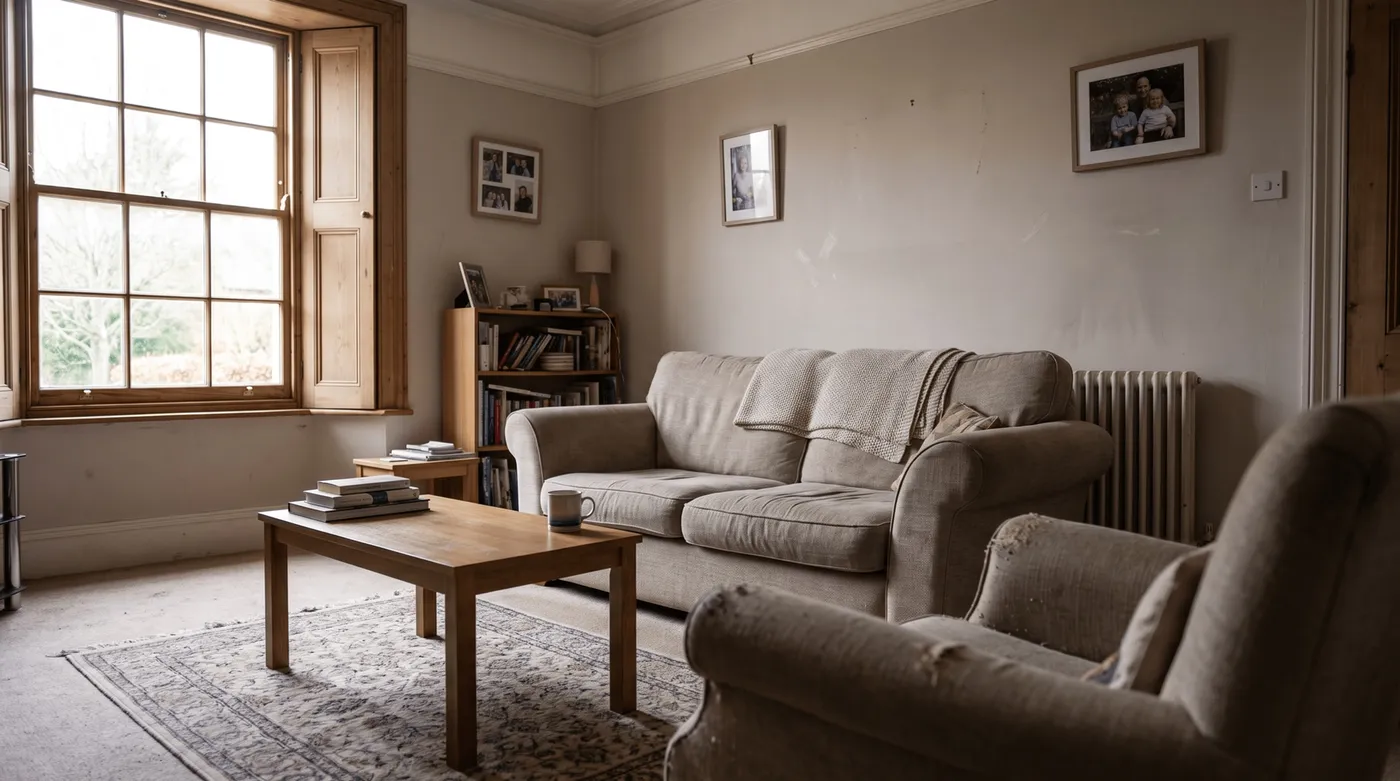
Walls are one of the most frequently logged problem areas, and the findings range widely in seriousness. At the minor end are scuffs, fingerprints and light marks, common around sockets, light switches, behind furniture and along hallways. At the more serious end are holes from fixings, abrasions from furniture movement, adhesive residue from hooks, and unauthorised repainting.
What turns a wall mark from cosmetic to chargeable is scope, cause and the distinction between wear and damage. A few light scuffs along a hallway after a long tenancy are usually fair wear. A wall pockmarked with unfilled fixing holes, or a room repainted a colour not agreed, is a different matter. Tenancy length is central to the judgment: the longer someone has lived somewhere, the more marking is expected and accepted as ordinary use.
Light and white paint finishes show marks more readily, and soft modern plaster chips more easily during moves, which is why these findings appear often in newer flats. The clerk’s task is not to rule on liability but to record the visible state and, where relevant, the apparent cause, so that the wear-versus-damage judgment can be made fairly on the evidence.
How is flooring wear assessed at check-out?
Flooring is among the most commonly documented and most costly issues, because replacement is expensive and, in open-plan layouts, often cannot be done in isolation without mismatching the rest.
Carpets show pile compression in traffic lanes, staining from spills, and odours from pets or smoke. Steam cleaning does not always restore them, and can leave rings or faded patches of its own. Hard floors, while more durable, show scratches from furniture and footwear, sun-bleaching under rugs, and water damage near kitchens and bathrooms.
The governing principle here is fair wear and tear set against the item’s lifespan. A carpet worn after several years of ordinary use is largely wear, and a landlord cannot charge the full cost of a new one, because betterment, putting the landlord in a better position than they started, is not recoverable. Genuine damage beyond reasonable use, such as a burn or a large stain, is a different question. As ever, the clerk’s job is to record exactly: “two parallel 12cm scratches, central living area, running from the television unit toward the dining zone” is the kind of located, measured detail that resolves a dispute either way.
Which issues are most commonly chargeable versus fair wear?
The recurring issues fall into a rough pattern of what tends to be recoverable and what is usually treated as ordinary use. The table is a guide to how these are generally weighed, not a fixed rule. Every case turns on its own evidence and the condition recorded at check-in.
Issue
Often fair wear and tear
Often potentially chargeable
Cleaning
Light dust or wear consistent with the check-in standard
Property returned below the check-in cleanliness standard, with located omissions
Walls
A few scuffs or marks after a longer tenancy
Unfilled fixing holes, unauthorised repainting, impact damage
Carpets
Pile flattening and light fading over years of use
Burns, large stains, pet soiling beyond ordinary wear
Hard floors
Light surface scratching, gradual sun fading
Deep gouges, water damage from neglect, cracked boards
Missing items
Nothing; items present and accounted for
Items listed at check-in absent at check-out and unexplained
Damp and mould
Brief surface condensation in normal use
Established mould linked to a recorded defect or unaddressed report
The point of the split is to show why recording is everything. The same carpet, the same wall, can fall on either side of the line depending on the tenancy length, the check-in baseline, and the clarity of the description.
Why do missing items cause so much difficulty?
Missing items are a persistent finding in furnished and part-furnished properties, and they are some of the hardest to recover money for, because recovery depends almost entirely on the quality of the original check-in record.
Small items disappear most often: remote controls, lamp shades, drawer handles, bins, utensils. Sometimes tenants substitute their own belongings for landlord items and then remove their own at the end, leaving a gap. In properties that have turned over several times without proper interim inspections, whole furnishings can go untracked.
The difficulty is evidential. If an item was not described clearly at check-in, with its make, finish and condition, it is almost impossible to prove it was ever there, let alone recover its value. This is why detailed listing matters: “two scatter cushions, navy blue velvet, on the left of the sofa, with matching ottoman” preserves the chain of accountability. For landlords managing large portfolios, that level of detail is not pedantry; it is the only thing that makes loss recoverable.
How should damp and mould be recorded now the law has changed?
Damp and mould have moved from routine observations to serious health and safety matters, driven by Awaab’s Law, which took effect from October 2025 and is set to extend further to private rentals with defined repair timeframes. That shift raises the stakes on how these issues are recorded.
The common findings are condensation on internal glass, paint bubbling near corners, and mould in predictable places: bathrooms without working extractor fans, kitchens with little ventilation, and bedrooms where furniture sits tight against cold external walls. Tenants are often unaware that poor airflow or blocked trickle vents are contributing.
For the clerk, documentation is everything, and neutrality matters more here than anywhere. Record the extent (“approximately 30cm by 60cm”), the location (“rear left ceiling quadrant, en-suite”), and the observable context (“no working extractor fan present”), without diagnosing cause or assigning fault, which is contested and rarely provable on sight. Photographed and timestamped, ideally captured at interim inspections too, these notes build a defensible timeline of when an issue appeared and whether it was reported. With response times now regulated, that timeline protects everyone.
What safety issues do inspections commonly flag?
Safety findings recur often and carry the highest stakes, because they touch legal compliance, not just deposit deductions. Clerks routinely record smoke alarms that are missing, non-operational, or wrongly positioned, for example painted over, aged, or sited too close to an extractor. Where there is a gas appliance or solid fuel burner, a carbon monoxide alarm is required and is often found absent.
Beyond alarms, common hazards include loose bannister rails, furniture that could tip, and window restrictors missing on upper floors. A clerk is not an inspector certifying compliance, but the record of what was observed, clearly worded and photographed, contributes to the landlord’s maintenance trail and can matter a great deal if a question of safety is later raised. Anyone recording a possible hazard should note it factually and flag it for the appropriate professional check, rather than make a judgment they are not qualified to give.
The takeaway
The most common inspection findings are predictable: cleaning above all, then walls, flooring, missing items, damp and mould, and safety. What is striking is how often the issue itself is ordinary, and how much the outcome depends on the record rather than the fault. A deposit is the tenant’s money until evidence justifies a deduction, so the difference between a recoverable claim and a lost one is almost always the quality of the inventory.
For clerks, that means precise, located, neutral descriptions at check-in and check-out. For landlords and tenants, it means the inspection is not a formality but the document that decides who pays. This is general guidance, not advice on a specific dispute; for a contested deduction, the relevant deposit scheme’s adjudication service is the route to resolution.
Sources:
Tenancy Deposit Scheme, Statistical Briefing 2025 (cleaning featured in 54% of disputes; 1% of deposits adjudicated):tenancydepositscheme.com/article/…
The DPS, cleaning the top dispute cause for a fifth year (29.38% of DPS claims, 2025):property118.com/cleaning-tops-tenancy-deposit-claims-for-fifth-year-running
Awaab’s Law, in effect from October 2025 with a forthcoming private-rented extension:gov.uk/government/…
Renters’ Rights Act 2025, legislation.gov.uk:legislation.gov.uk/ukpga/…