A common belief is that the tenant pays whenever an appliance breaks. Usually they do not. If a landlord supplied the appliance as part of the let, repairing or replacing it after age, wear or a fault is normally the landlord’s cost. The tenant only becomes liable where damage, misuse or neglect caused the failure, and that has to be shown with evidence.
This article applies across the UK (England, Wales, Scotland and Northern Ireland). The general principle, that a landlord-supplied appliance is the landlord’s to maintain unless the tenant broke it, holds in all four nations. The precise legal route differs, and the deposit schemes that adjudicate disputes operate under each nation’s own rules. We flag those differences where they matter.
Start with the right default, because the wrong one causes most arguments. An appliance that the landlord provides at the start of a tenancy, listed on the inventory and included in the let, comes with an expectation that the landlord keeps it working. A fridge that gives out after eight years, a washing machine whose motor fails, an oven element that burns through. These are normal end-of-life events. They are the landlord’s cost.
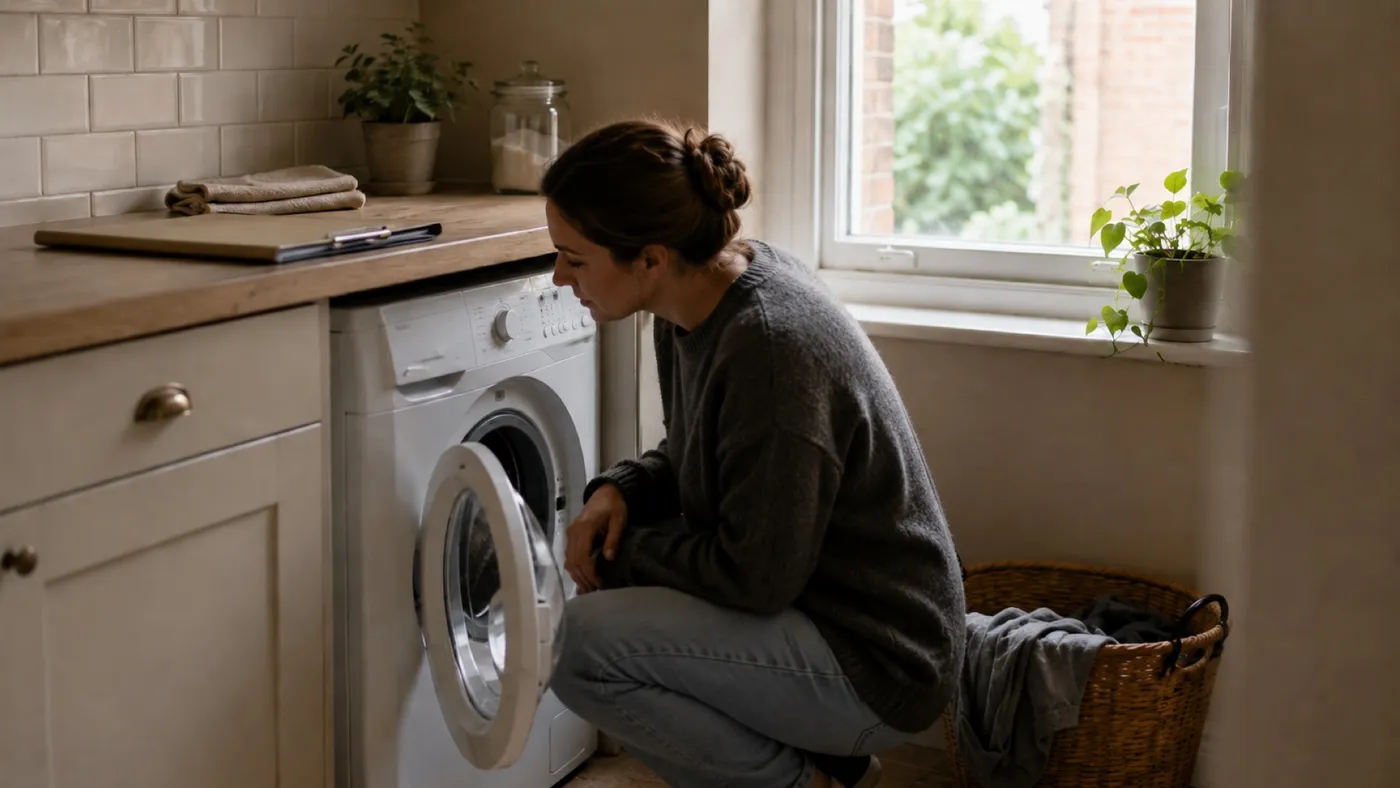
The tenant’s liability is narrower than people assume. It arises only where the failure was caused by the tenant. A forced oven door. A drum cracked by something left in a pocket. A dishwasher blocked because food waste was never cleared. Those are damage or neglect, and the tenant may reasonably be asked to contribute. But the cause has to be demonstrated, not assumed.
Who is responsible for what when an appliance fails?
The answer turns on why the appliance stopped, and that is decided by evidence rather than by whoever speaks first. The table below sets out the common scenarios.
Failure scenario
Ask yourself
Simple answer
Likely responsible party
What decides it
Age or fair wear, such as a motor failing or an element burning out after years of normal use
Did it fail because it was old or naturally worn out?
If it failed because it was old, it is usually the landlord’s responsibility.
Landlord
Age of appliance, expected lifespan, service history, and no evidence of tenant misuse.
Manufacturing fault, where the appliance fails within its expected life and there is no misuse
Did it fail because the appliance itself was faulty?
If it failed because of a product fault, it is usually a landlord or warranty issue.
Landlord, or possibly the manufacturer if it is still under warranty
Purchase date, warranty terms, and engineer’s fault diagnosis.
Tenant misuse or neglect, such as blocked filters from lack of cleaning, overloading, or ignoring a known leak
Did the tenant’s action or lack of action cause the problem?
If the tenant failed to clean, maintain, or report a problem, they may be responsible.
Tenant may be liable for the resulting cost
Engineer’s report, check in condition, maintenance instructions, and whether the tenant reported the issue in time.
Accidental damage by the tenant, such as a cracked drum, forced door, or dropped item
Did the tenant damage the appliance?
If the tenant physically damaged it, they may be responsible.
Tenant may be liable
Visible damage, inventory showing prior good condition, photos, and repair quote.
Notice the recurring word: cause. Two appliances can stop working on the same day for opposite reasons. One was simply old. One was misused. The bill follows the cause, and the cause follows the evidence.
Does the law actually require a landlord to fix appliances?
Not directly, and this is where care is needed. Section 11 of the Landlord and Tenant Act 1985 places a repairing obligation on landlords, but it covers the structure and exterior of the property and the installations for water, gas, electricity, sanitation, space heating and water heating. It does not, by its own terms, cover a freestanding washing machine or a microwave.
Where does appliance liability come from, then? Usually from the tenancy agreement. If the contract says the landlord provides and maintains the listed appliances, that is a contractual obligation the tenant can rely on. Some fixed appliances may also fall within section 11 where they form part of the heating or hot water installation, for example an integrated boiler or an immersion heater. A standalone tumble dryer almost certainly does not.
So the honest position is twofold. The statutory repairing duty under section 11 is real but limited. For most household appliances, responsibility rests on what the tenancy agreement says, read alongside the documented condition of the item. Check the agreement first.
How is a dispute over a broken appliance settled?
By what can be shown, not by what is claimed. If a deposit deduction is proposed for a failed appliance and the tenant disputes it, an adjudicator from the relevant deposit scheme will look at the evidence on both sides. The strongest pieces are usually:
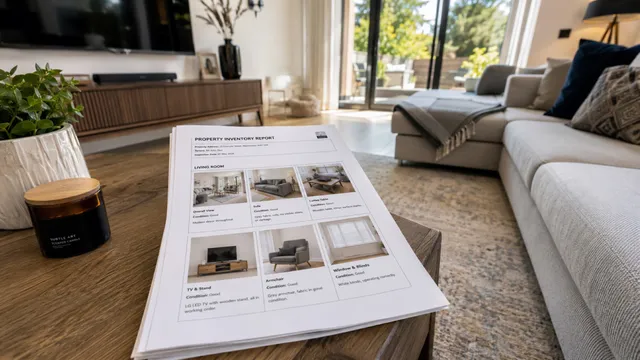
- The check-in inventory recording the appliance’s make, age if known, and working condition at the start.
- Any faults the tenant reported during the tenancy, and when.
- Repair or service records held by the landlord.
- An engineer’s diagnosis of why the appliance failed.
- **Photographs **of any physical damage.
“It just stopped” and “the tenant broke it” are both assertions. Neither wins on its own. The landlord who wants to charge the tenant carries the burden of showing that tenant action caused the failure. The tenant who denies responsibility is helped enormously by a clean check-in record and by having reported any developing fault promptly.
What is betterment, and why does it block charging a tenant for an old appliance?
Betterment is the principle that a tenant should not be made to pay for an improvement to the landlord’s property. It is central to deposit adjudication. The guidance from the Tenancy Deposit Scheme on damages and betterment makes the point plainly: a landlord cannot use a tenant’s deposit to fund an upgrade or to replace an old item with a brand new one at the tenant’s full expense.
Apply that to appliances. Suppose a ten-year-old washing machine fails, and the tenant did genuinely cause part of the damage. The landlord cannot deduct the full price of a new machine. The old one had little remaining value. Any fair charge reflects that depreciated value, not the cost of betterment. And where the appliance simply reached the end of its life, there is no betterment question to resolve, because there is nothing to charge the tenant for in the first place.
This cuts both ways and is worth stating neutrally. A tenant who has plainly damaged a near-new appliance may reasonably face a charge close to its replacement cost. A tenant blamed for an old appliance’s natural failure should not.
Staying even-handed
The outcome should not depend on who is more insistent. A landlord is not automatically right because they own the property. A tenant is not automatically right because they say the appliance failed on its own. The documented condition decides it. A thorough check-in inventory, with appliances listed and their condition noted, protects both parties: it gives the landlord a baseline to point to, and it gives the tenant proof of the state the appliance was in when they moved in.
The key takeaway
A landlord-supplied appliance that fails through age, wear or fault is normally the landlord’s cost to put right. The tenant becomes liable only where misuse, neglect or accidental damage caused the failure, and that must be evidenced, not assumed. Check the tenancy agreement to see what the landlord agreed to maintain, keep faults reported and recorded, and remember that betterment caps any charge for an older item. This is general guidance, not advice on a specific dispute. For a contested deduction, the relevant deposit scheme’s adjudication process and, where needed, a qualified housing adviser are the right next step.
Sources: Landlord and Tenant Act 1985, section 11 (repairing obligations); Tenancy Deposit Scheme guidance on damages and betterment; Landlord and tenant responsibilities for repairs, Shelter England
Links to further information:
depositprotection.com/learning-centre/…