A worn carpet is usually fair wear and tear, not damage. Wear is the gradual, expected deterioration from normal living: flattened traffic lanes, mild fading, general thinning. Damage is beyond that, such as burns, tears, large stains or pet soiling. The longer the tenancy, the more wear is expected, so what counts as chargeable damage effectively rises with time. This applies UK-wide.
Is a worn carpet at check-out something the tenant should pay for? Usually not, because normal living wears carpets down and that gradual deterioration is fair wear and tear. A tenant is entitled to live in the property, and a landlord cannot charge for the wear ordinary use produces. The question is never whether the carpet changed. It is whether the change goes beyond what normal use over that length of tenancy would produce.
This guide applies across England, Wales, Scotland and Northern Ireland. The principle of fair wear and tear is common to all four nations and is applied by the tenancy deposit schemes that adjudicate disputes. This is general information and not legal advice for a specific dispute. Where a real disagreement is heading to adjudication, follow the scheme’s own process.
What is the difference between wear and damage on a carpet?
Fair wear and tear is the deterioration you would expect from ordinary use, over ordinary time, by a reasonable tenant. Damage is deterioration caused by neglect, accident or misuse, over and above that baseline.
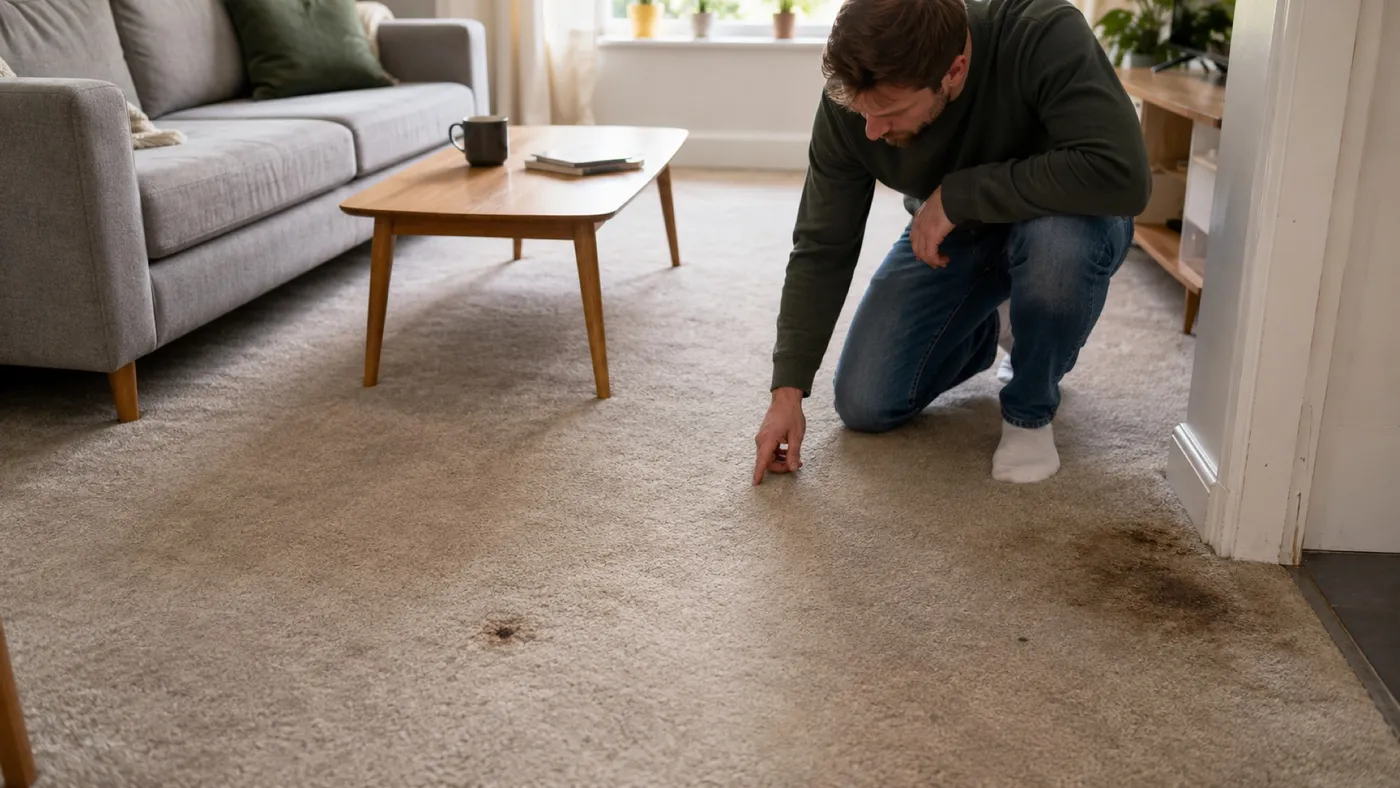
On a carpet, the honest test is often about the type of defect, not just how bad it looks. Uniform flattening along a hallway or in front of a sofa is wear. Fading near a window from daylight is wear. A single cigarette or iron burn is damage, because normal use does not burn a carpet. A large drink stain that has set is usually damage. Pet soiling that has soaked into the underlay is damage. The pattern matters: wear is broad, even and gradual; damage is localised, sudden or the result of something specific going wrong.
So two carpets can look equally tired and be treated differently. One thinned evenly over years of walking is wear. One with a scorch mark by the fireplace is damage, however new the carpet is.
How does tenancy length change whether it is wear or damage?
Tenancy length raises the threshold for what counts as chargeable. The longer someone has lived somewhere, the more wear is reasonably expected, so the point at which deterioration becomes “more than normal” moves further along.
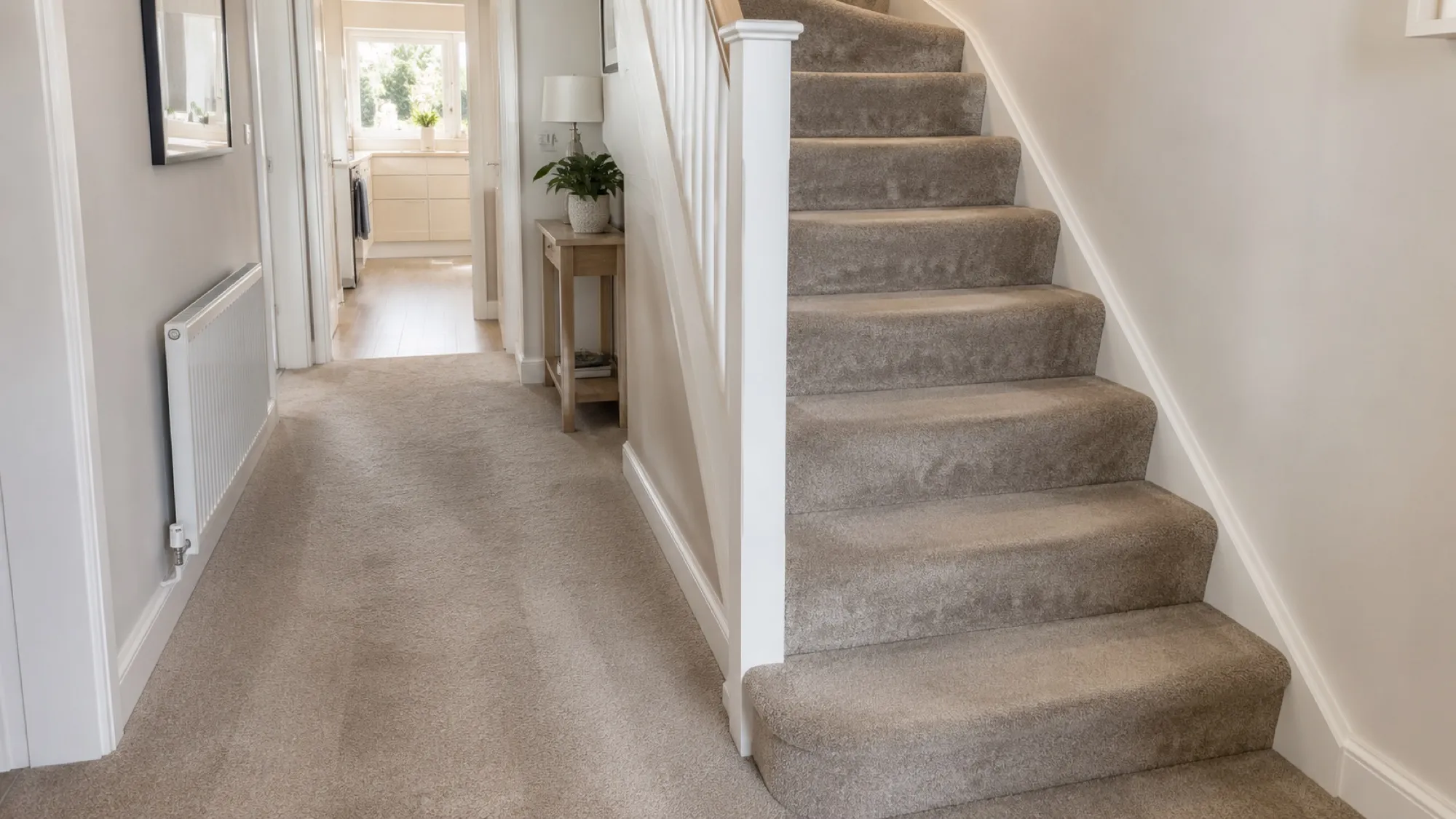
A carpet that shows clear traffic-lane flattening and general thinning after six months is doing something odd, and it is worth looking at why. The same carpet showing the same thinning after six years is simply a carpet that has been lived on for six years. That is exactly what carpets do, and an adjudicator will expect it.
This is where lifespan comes in, and it needs care. Carpets have a typical usable life, but the figure depends heavily on quality, room type and use. Scheme guidance commonly treats a medium quality carpet as having a lifespan of around five to eight years, with heavy traffic areas often wearing faster and top quality carpets potentially lasting longer. Any such figure is guidance that assessors use to reason about condition, not a rule set by any statute. Do not treat “the carpet is X years old so nothing is chargeable” as a legal cut-off. It is a way of judging how much usable life the carpet had left, not a switch that flips.
The practical effect is real, though. A carpet close to the end of its expected life has little chargeable value remaining. If a tenant genuinely damages a carpet that was already near worn out, the landlord has lost very little, because that carpet was about to be replaced anyway. That principle is called betterment.
What is betterment, and why does it cap the charge?
Betterment means a landlord cannot end up better off at the tenant’s expense. A tenant who damages an old carpet should not have to fund a brand-new one, because that would leave the landlord with a fresh carpet paid for partly by the old one’s remaining wear.
So even where damage is clear, the charge is not the full replacement cost. It is the remaining value that was lost. If a carpet was already part-way through its expected life when damaged beyond repair, only the value of the years it would otherwise have had left is lost, so a charge reflects roughly that, not a whole new floor. The deposit schemes commonly apply this kind of reasoning, and their published guidance on fair wear and tear, betterment and apportionment sets out how it works.
This is why type of defect and age have to be weighed together. A burn in a nearly new carpet is damage with high remaining value lost. A burn in a much older carpet is still damage, but the recoverable amount is small.
Does a higher rent or a premium property raise the standard?
No. The rent paid and the prestige of the property do not change the wear and tear test. This is worth stating plainly because it comes up often. A tenant in an expensive flat is not held to a stricter standard than a tenant in a modest terrace, and a premium finish is not entitled to age more slowly.
What can differ is the specification of the carpet itself. A high-quality wool carpet may have a longer expected life than a budget synthetic one, and that longer life feeds into the lifespan and betterment calculation. But that is about the material, not the postcode or the rent. A landlord cannot argue that because the tenant pays a lot, ordinary wear should count as damage. The bar is the same everywhere.
Carpet conditions compared
The table sets the common carpet conditions side by side. It shows the usual call, how tenancy length shifts it, and how betterment limits any charge. Treat it as a reasoning tool, not a tariff. Every carpet is judged on its own facts.
Carpet condition
Likely wear or damage
Effect of tenancy length
Betterment factor
Traffic-lane flattening
Wear
Strongly wear over a long tenancy; unusual only if severe after a very short one
Not chargeable at all; no lost value to recover
Fading (daylight, sun)
Wear
More expected the longer the tenancy
Not chargeable; normal ageing
Single burn (cigarette, iron)
Damage, regardless of length
Length does not change that it is damage
Charge limited to remaining life; small if carpet is old
Large set-in stain
Usually damage
Length does not reclassify it, but reduces recoverable value
Recover lost remaining value, not full replacement
Pet soiling into underlay
Damage
Length does not excuse it
Repair or partial replacement, capped by age and remaining life
What is the clerk’s job in all this?
The clerk records condition precisely; the clerk does not decide the charge. That distinction matters. A good inventory does not say “carpet worn”. It says where, what type, and how much: “living room, moderate traffic-lane flattening front of window to door, no marks” at check-in, and the equivalent at check-out.
What makes a dispute resolvable is the comparison between those two records. If check-in notes a clean carpet with light wear and check-out notes a burn near the hearth, the change is evidenced and the type of defect is clear. If both records are vague, the evidence is weak and the parties are left arguing impressions. A professional inventory is not legally required anywhere in the UK, and its absence does not by itself decide a dispute either way. It is good practice and strong evidence, and where a deposit is disputed it is often the single most useful document either side has.
The charge decision then sits with the landlord and tenant, and if they cannot agree, with the deposit scheme’s adjudicator. The clerk’s contribution is accurate, dated, described condition. Photographs help, provided they are clear and their date is reliable.
The one thing to do next
Before you argue about a carpet, put the check-in and check-out reports next to each other and name each mark by location, type and extent. Then ask two questions in order: is this the kind of thing normal living produces over this length of tenancy, and if it is genuine damage, how much usable life did the carpet actually have left. Those two questions, in that order, resolve most carpet disputes without anyone needing an adjudicator.
Sources:
- Tenancy Deposit Scheme, Understanding product lifespans in rented homes: tenancydepositscheme.com/article/…
- Tenancy Deposit Scheme, Ask TDS: What is fair wear and tear in a rental property?: tenancydepositscheme.com/article/…
- Deposit Protection Service, What makes a reasonable deposit claim?: depositprotection.com/claims-and-disputes/…
- Deposit Protection Service, In disputes, be fair: depositprotection.com/learning-centre/…
- SafeDeposits Scotland, What constitutes fair wear and tear and betterment?: safedepositsscotland.com/article/…
- TDS Northern Ireland, Appliance Lifespan & Fair Wear and Tear Guide: tdsnorthernireland.com/article/…